I’ve had quite a life, quite a century.
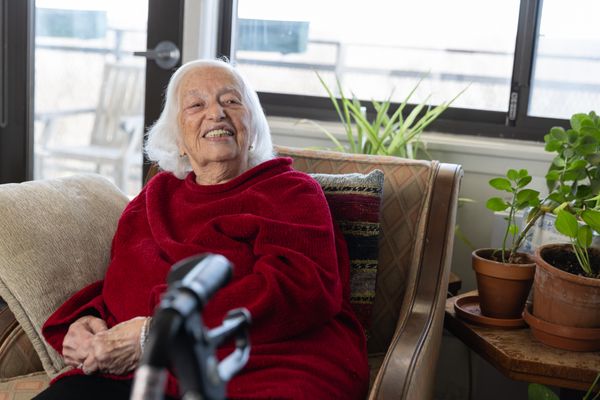
“It’s been a good century,” says Deborah. At 103 years old, she can say that from experience.
When Deborah was born in 1923, New York looked very different. The Empire State Building did not yet exist. And while automobiles were all the rage, it wasn’t uncommon to see horse-drawn carriages on the streets. Some social programs did exist, but public safety nets like Social Security wouldn’t be more widely implemented until after the Great Depression in the 1930s. “There was nothing like meals on wheels available in those days,” says Deborah.
Deborah looks forward to that friendly knock on the door. “Like clockwork,” she says. “They’re really reliable.”
While in good health — Deborah has very few complaints — she still struggles with mobility. She relies on her walker to get around her apartment and can’t stay standing for too long. Her hands also shake, which makes cooking difficult. Last Thanksgiving, Deborah wanted to make one of her signature dishes, Gravlax, for her family. Because of the hand tremors, Deborah accidentally poured in more cognac than she meant to. “The kids said it’s the best I ever made it,” recalls Deborah with a laugh.
Deborah has three children. “They are my joy and support,” she says, especially now that her husband, Irving, has passed. “I had a happy marriage,” says Deborah. “We had 64 happy years.”
But, before she met her husband, Deborah was engaged to another man. His name was Jerry and they’d known each other since they were children. “He was my first love,” she says.
When the United States entered World War II in 1941, Jerry felt it was his duty to enlist. Deborah, though worried, understood. The two kept in contact via letters. “He wrote me every day in the six months he was in the service,” she says. Then, the letters stopped.
Jerry, along with hundreds of other American soldiers, was being transported by the ship the SS Léopoldville when it was torpedoed by a German U-boat and sunk just five miles off the coast of France. He was one of the many casualties.
“I was so devastated by his death that I couldn’t throw out anything that he touched,” says Deborah. But it hurt to see those letters, so they went into a box. Deborah had all but forgotten about them until a few years ago, when she and her daughter rediscovered them while cleaning out the spare bedroom. Going through them almost 80 years later has been emotional for Deborah. Jerry is forever frozen at 21 years old. He never got the chance to live a long life, like Deborah. “He was brilliant,” she says. “The world lost a great writer.”
To honor his memory, she’s been working with her daughter and son-in-law to transcribe the letters and publish them in a book. “I want to bring Jerry’s writing to the world,” she says. When she’s gone, she wants to be sure that someone remembers him.
Memories are the only thing Deborah has of many of the people she’s known and loved. “Everybody’s younger than me,” she says. She’s a link to a time very few can remember firsthand.
“I’ve had quite a life, quite a century,” says Deborah. “I have been blessed in many ways.”